
Sake Town That is Attracting Attention From Around the World~ Exploring the Appeal of Saijo, Woven together from Sake and People ~
Interviewees: Mr. Michael Ou et al.
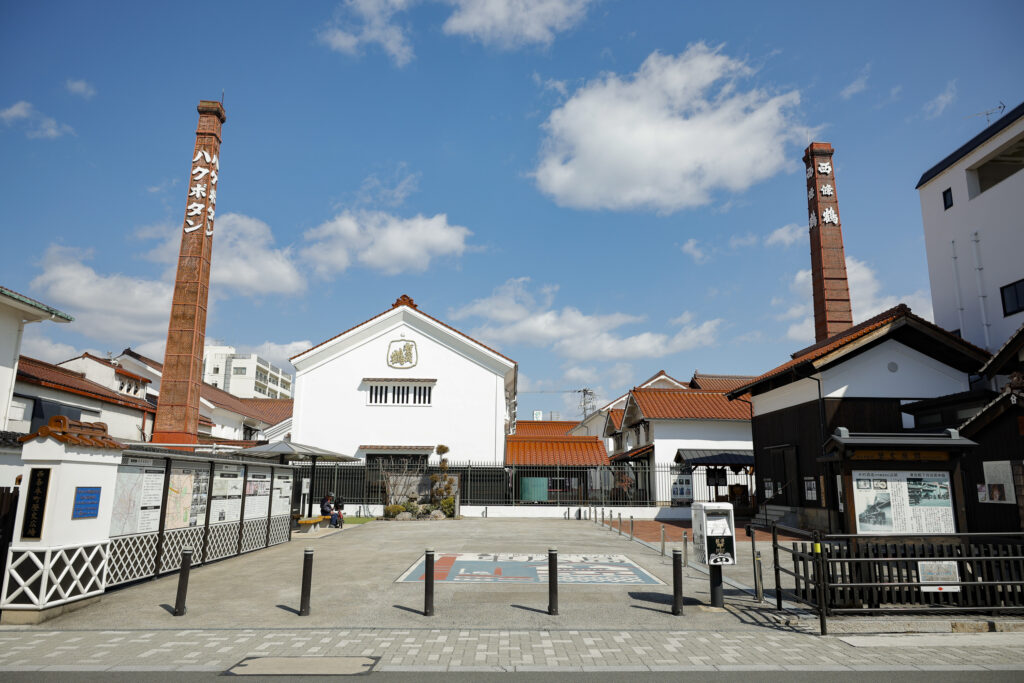
Saijo in Higashihiroshima City is one of the three most famous brewing regions in Japan. This town with its red-brick chimneys and white-walled sake storehouses is known as the “sake capital” where a traditional sake-making atmosphere still remains, and continues to attract many visitors from Japan and overseas. In October, 2025, SAKE SERVICE INSTITUTE INC. (SSI) and SSI INTERNATIONAL co-hosted the “Kikisake-Shi Forum 2025 (Sake Sommelier Forum 2025)” was held in Saijo for the first time with sake sommeliers gathering from Japan and overseas. Many sake sommeliers from overseas attended the event, talked with brewers in Higashihiroshima City, and also participated in one of the largest sake festivals in Japan.
This article introduces the town of Saijo in Higashihiroshima City through the lens of sake, looking at its history, culture and the warmth of its people, from a variety of perspectives that can be enjoyed by both sake lovers and non-sake lovers alike.
Talking about the Sake-making Philosophy of 10 Breweries in Higashihiroshima
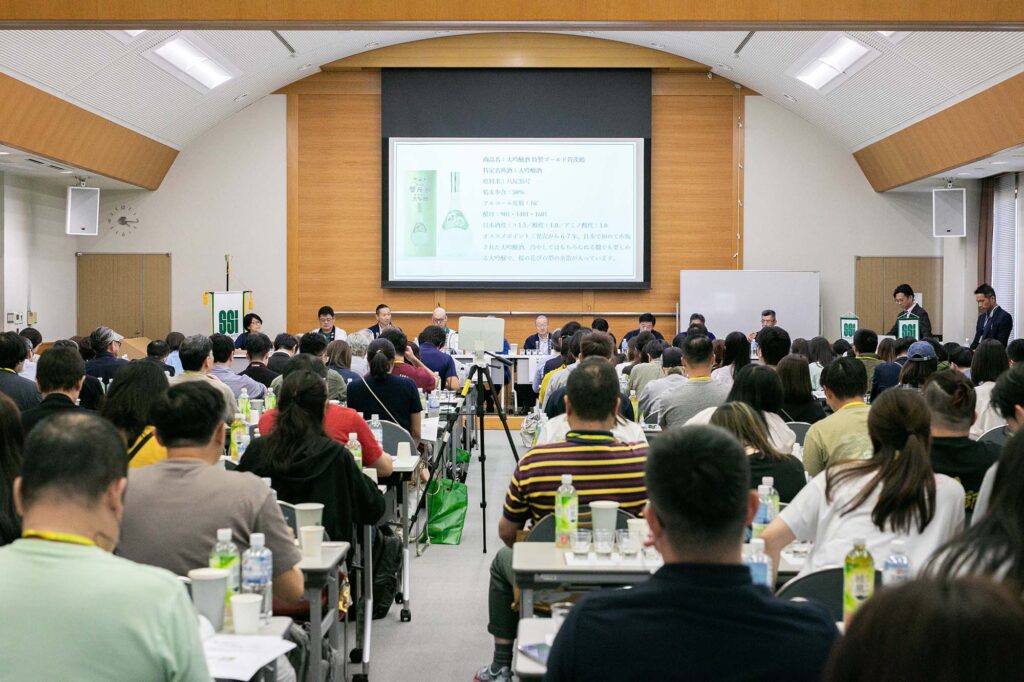
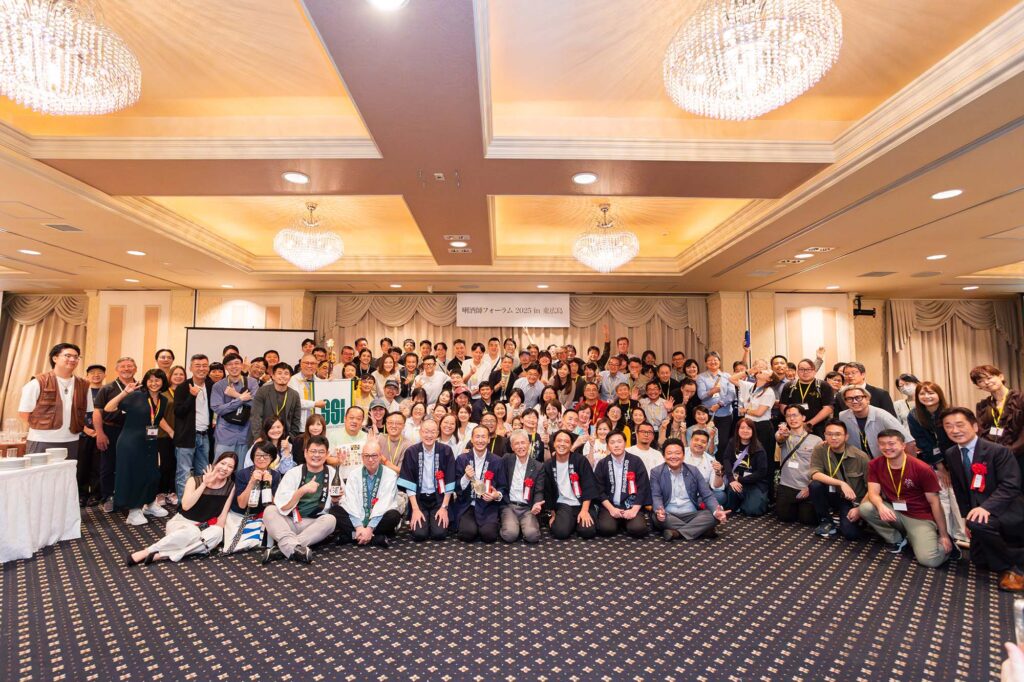
At the Forum, sake sommeliers and sake lovers gathered from both Japan and overseas. As many as 128 people gathered! In 2024, Japan’s traditional sake brewing was inscribed on UNESCO’s Intangible Cultural Heritage list. Since then, the recognition that “Sake is not only an alcoholic beverage but also a part of Japanese culture,” has continued to spread throughout the world. There is no doubt that sake is attracting even greater attention now.
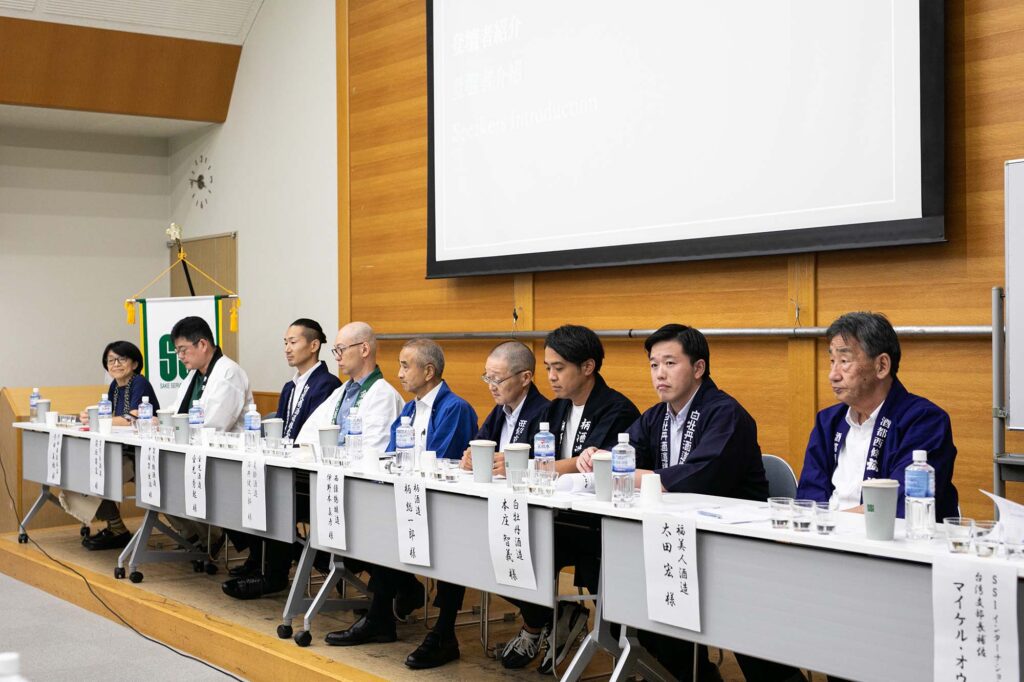
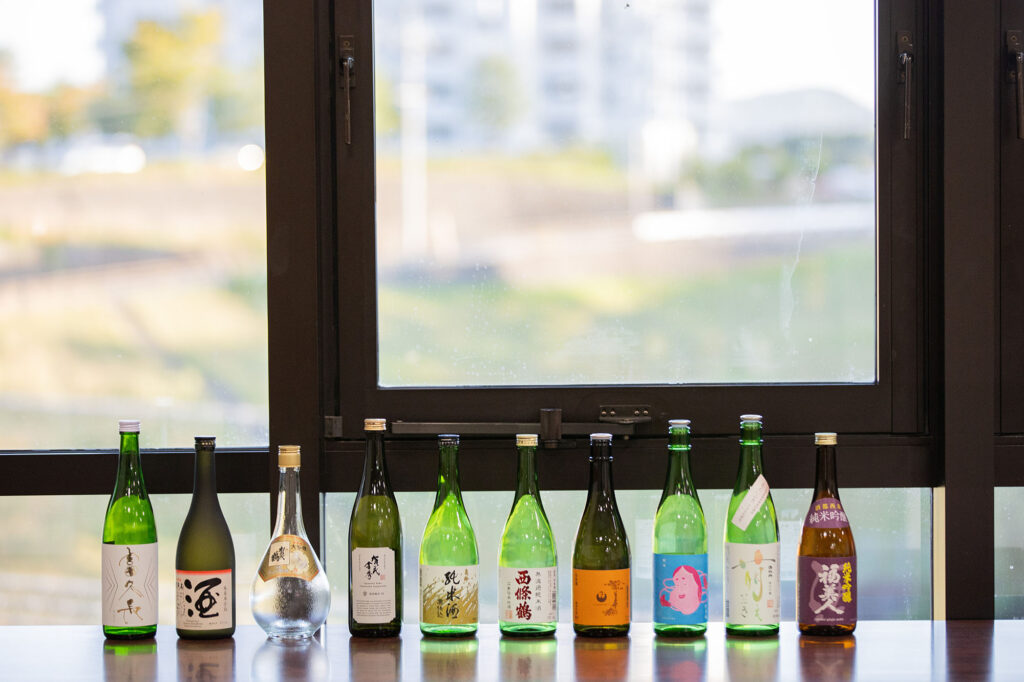
At the session entitled “Tasting Discussion with Higashihiroshima’s 10 Breweries and Their Signature Brands,” representatives from the following 10 breweries located in Higashihiroshima took the stage: Kamotsuru Shuzo, Kamoizumi Shuzo, Saijotsuru Jozo, Kirei Shuzo, Hakubotan Shuzo, Fukubijin Shuzo, Sanyotsuru Shuzo, Imada Shuzo Honten, Kanemitsu Shuzo, and Tsuka Shuzo. The climate and natural features and the quality of water suitable for sake brewing as well as the accumulated technical skills have led to the establishment of many breweries here. It is very rare even across Japan that so many breweries are located in such a small area.
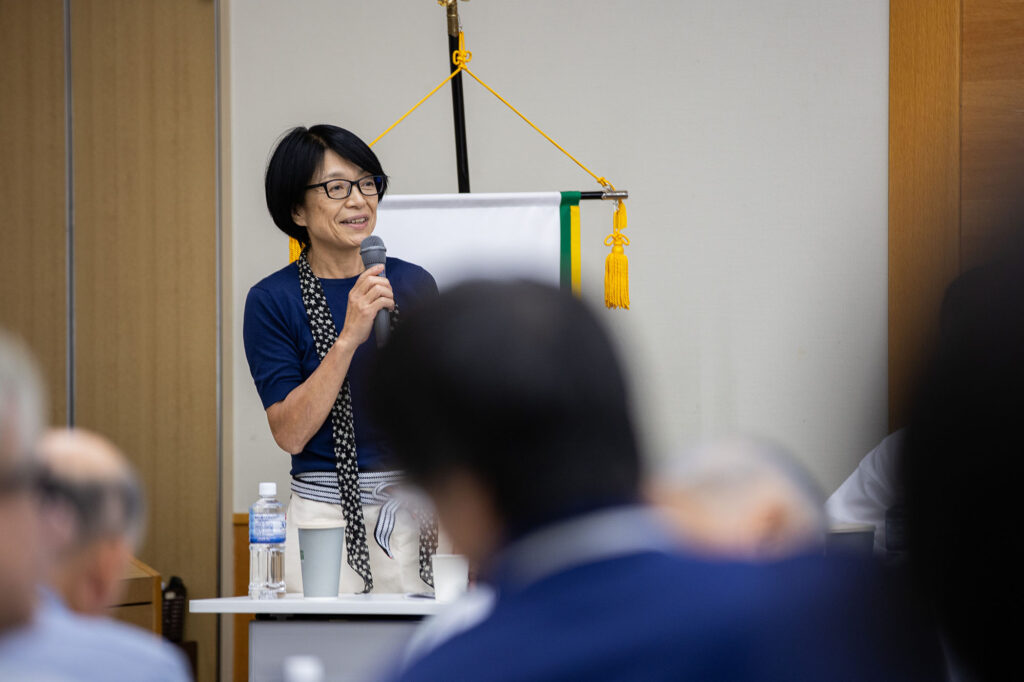
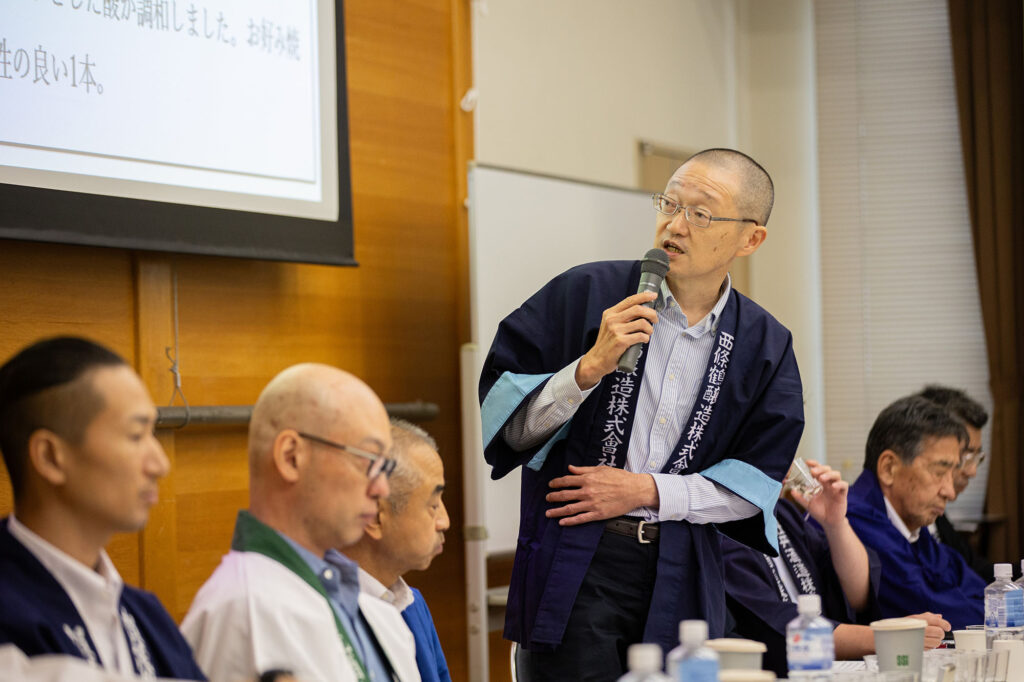
The respective representatives of the breweries introduced their signature sake brands and talked about their passion for sake brewing in tandem with the local community and their commitment to sake brewing.
“Akitsu-cho, Higashihiroshima City is the home of Hiroshima toji, master sake brewers. We brew sake here with the aim of creating smooth ginjo-shu with a gentle umami flavor,” said Ms. Miho Imada, CEO and Chief Sake Brewmaster of Imada Sake Brewing Co., Ltd. (Imada Shuzo Honten).
“Hiroshima has many specialty dishes cooked with sweet seasonings. I would love for you to enjoy sake with okonomiyaki,” says Mr. Masahiko Inomoto, the owner of Saijotsuru Sake Brewing Co., Ltd. (Saijotsuru Jozo).
Each representative from the 10 breweries spoke passionately as they presented their signature brands, and sake sommeliers who listened intently to their explanations at the venue were impressed by the breweries traditions passed down from generation to generation and their approach towards new challenges.
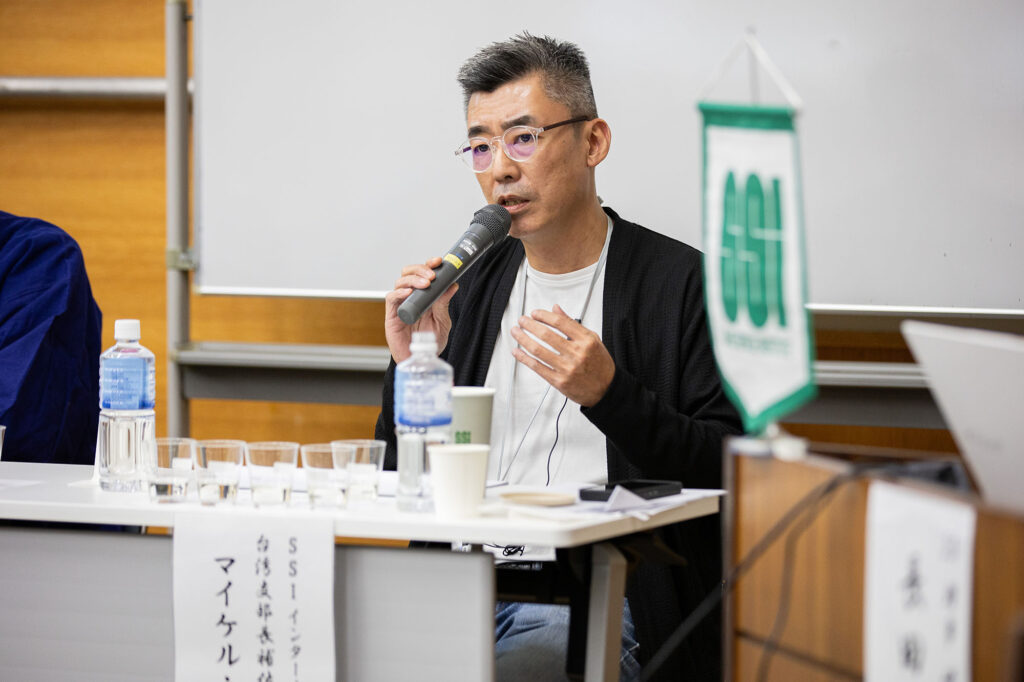
Each brewery presented its proudly-made signature brands. Mr. Michael Ou, who has been contributing to the spread of sake culture in Taiwan and has been appointed a “sake samurai,” appeared on stage to taste some of the signature brands and share his comments from an international perspective. He exquisitely described the aroma, taste, and texture with carefully selected expressions and delved deeply into the appeal of each sake brand.
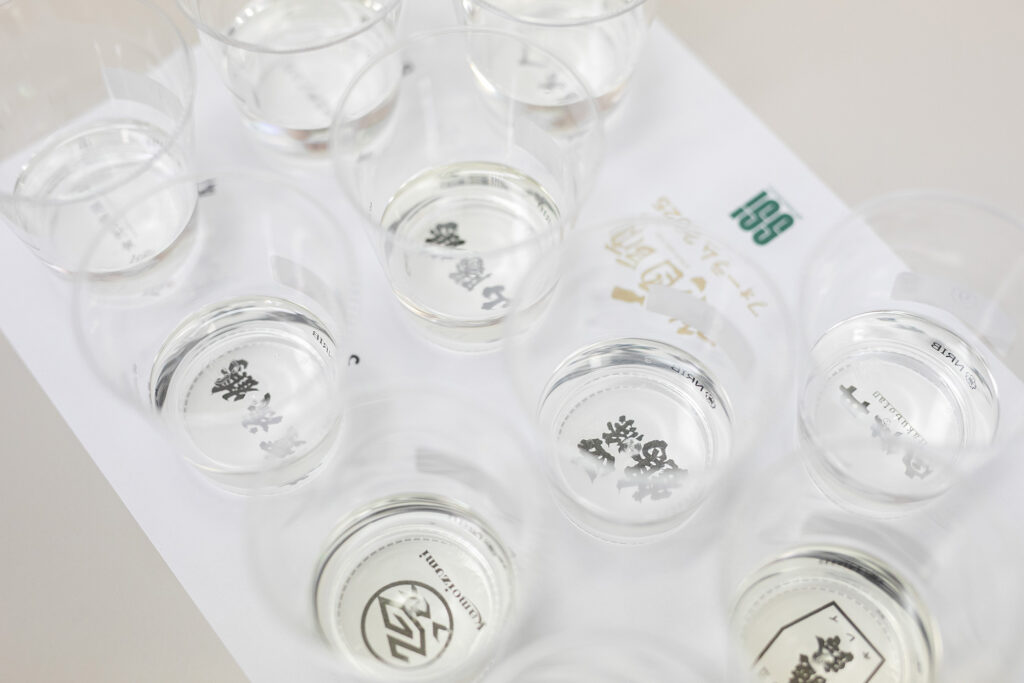
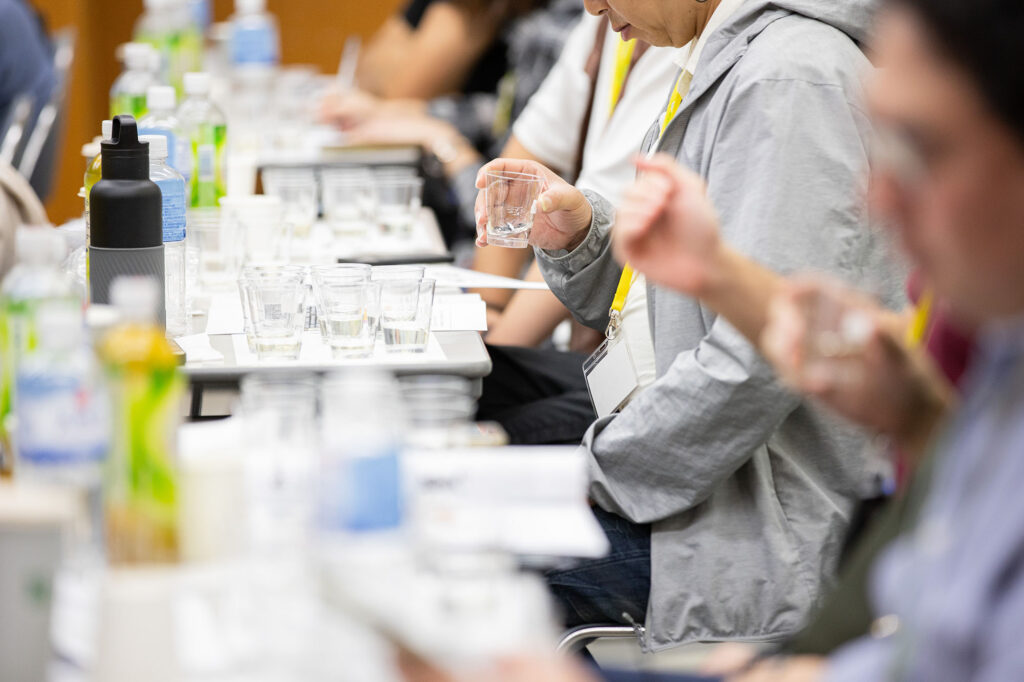
Participants took cups in hand to smell the aroma and compared the flavors while savoring the sake. Some participants were observed taking notes diligently. “I’m so surprised to find that the sake is so different with each brewery!” “The spread of the aroma is delicate.” Such individual impressions were heard from all around the venue, creating an enthusiastic and harmonious atmosphere. As the tasting progressed, conversations among sake sommeliers grew lively, creating a moment that truly reflected the connections brought together by sake.
Evening Social Gathering with Conversations among Brewers and Sake Sommeliers
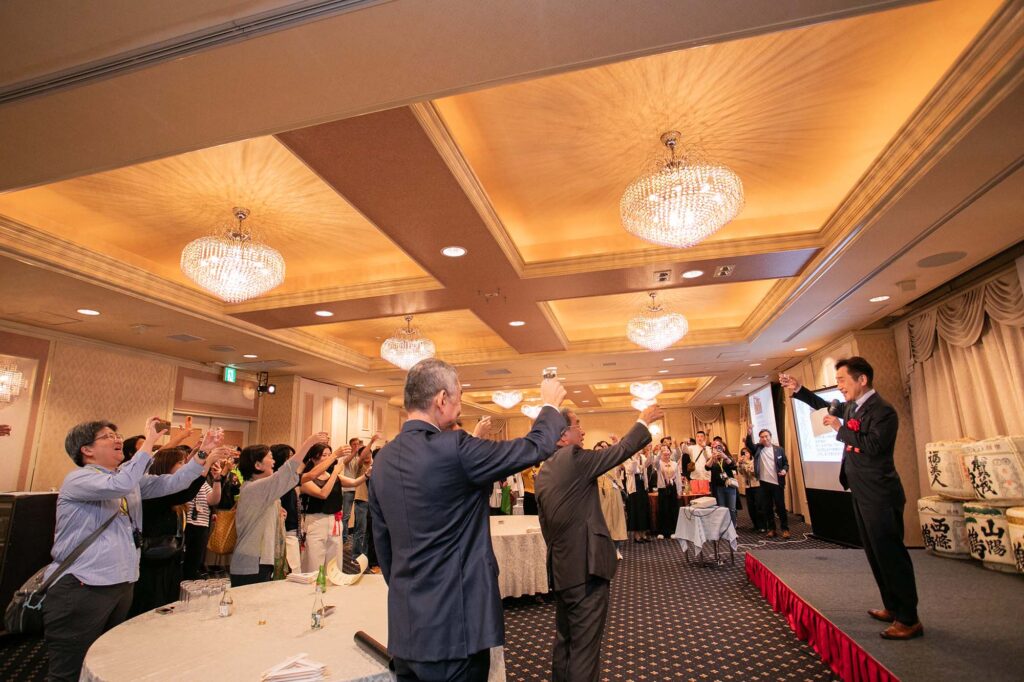
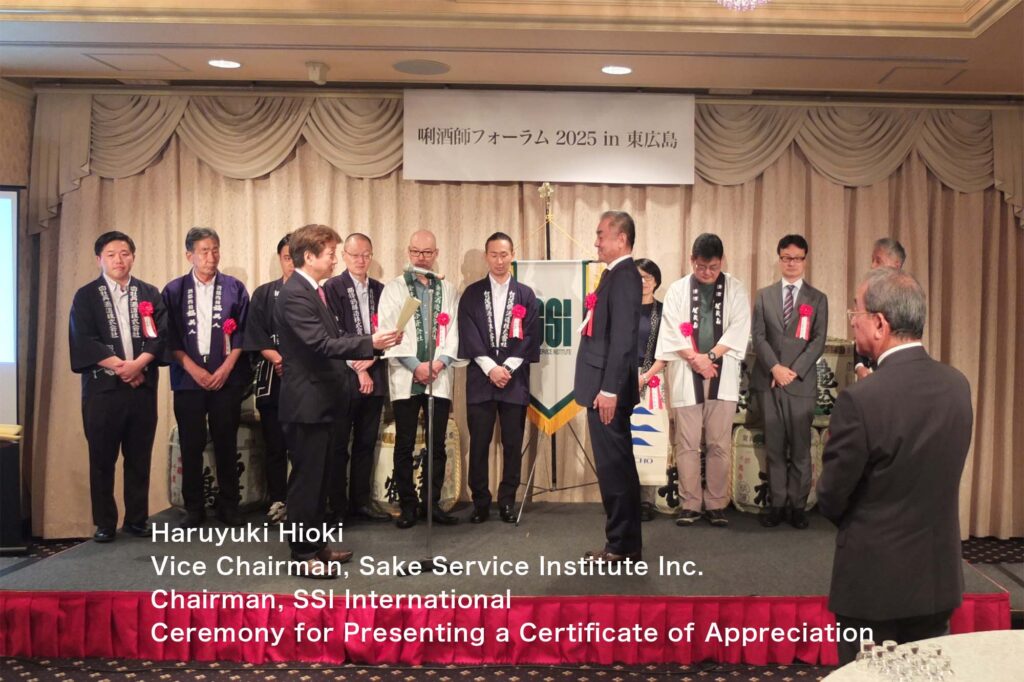
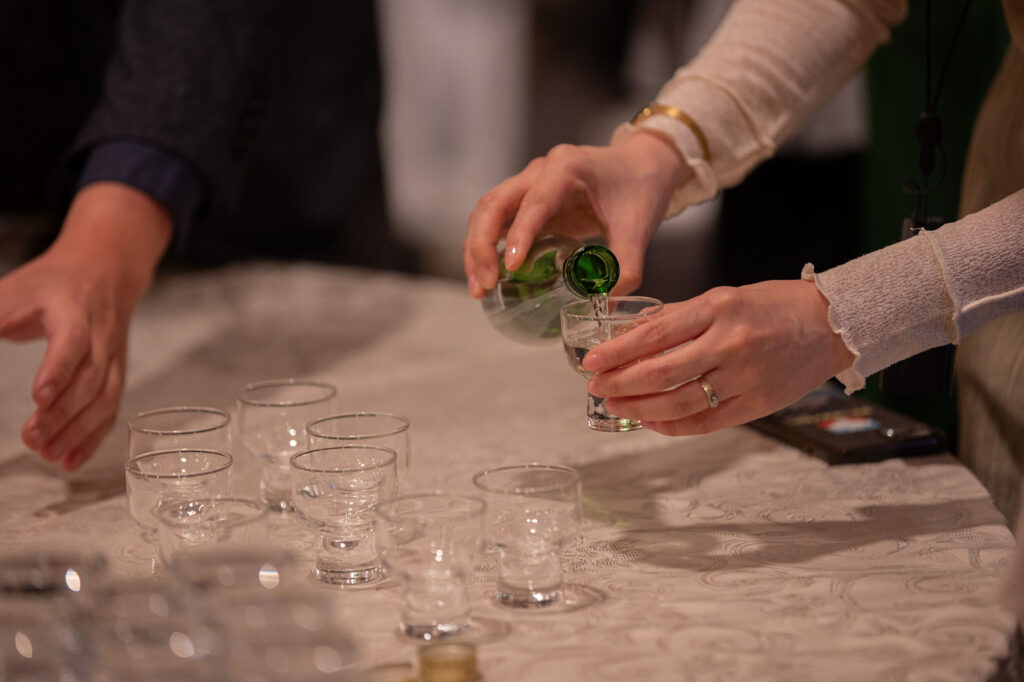
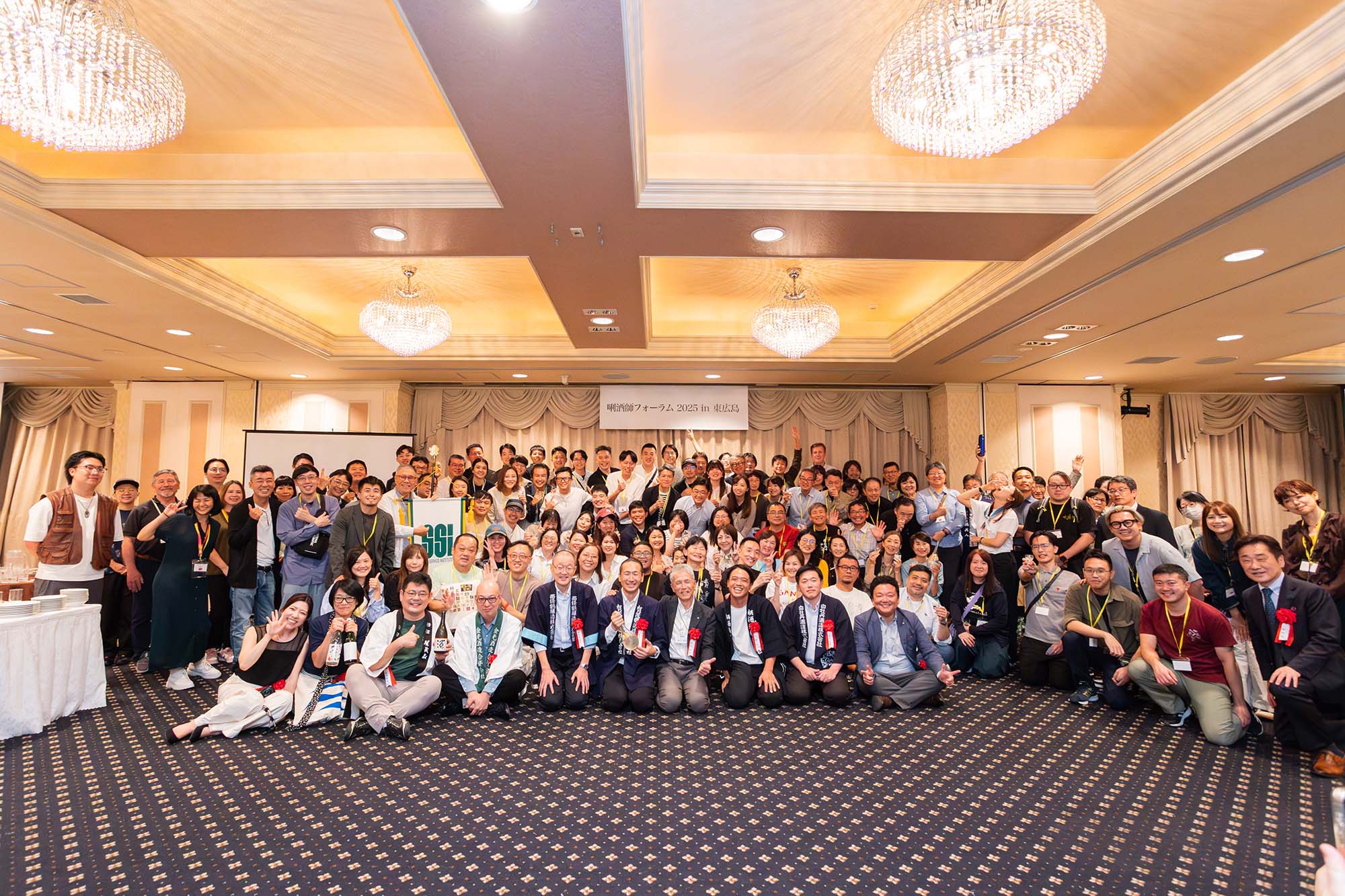
In the evening, a large social gathering was held at a hotel in the city.
The breweries served their own sake, and sake sommeliers from Japan and overseas, people involved in sake brewing, and general sake lovers raised their glasses for a toast! It was impressive to see how the circle expanded naturally with the common theme of sake, overcoming language barriers and cultural differences.
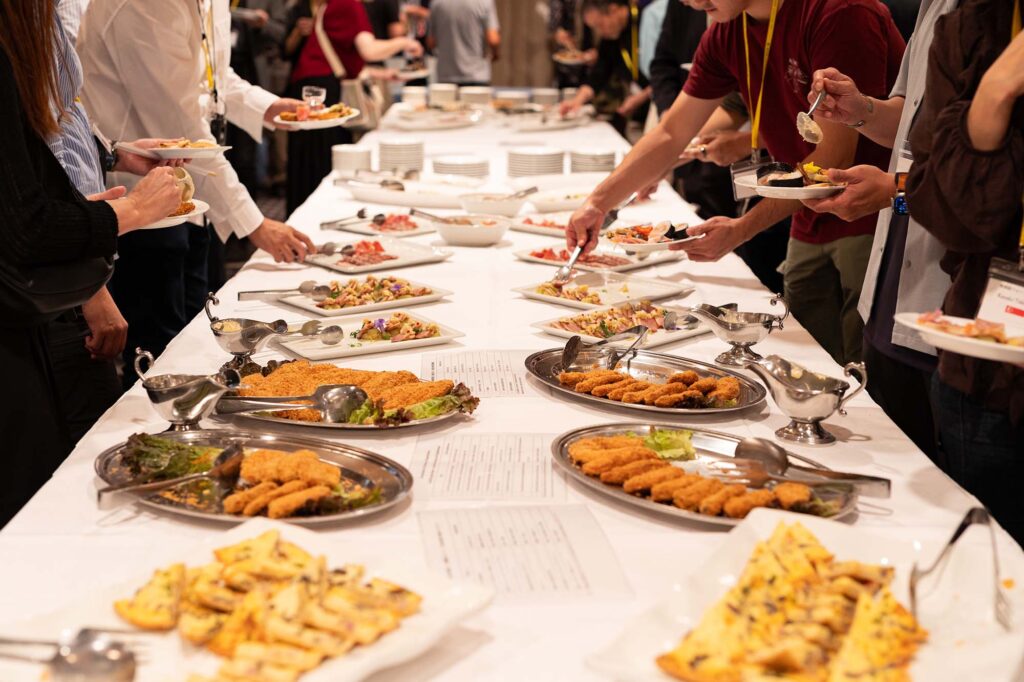
The food served was a special menu prepared by the hotel for the occasion. Carefully prepared dishes that can only be found in a “Sake Town” were served. Each brewery carefully selected dishes that go well with its proudly-made signature brands.
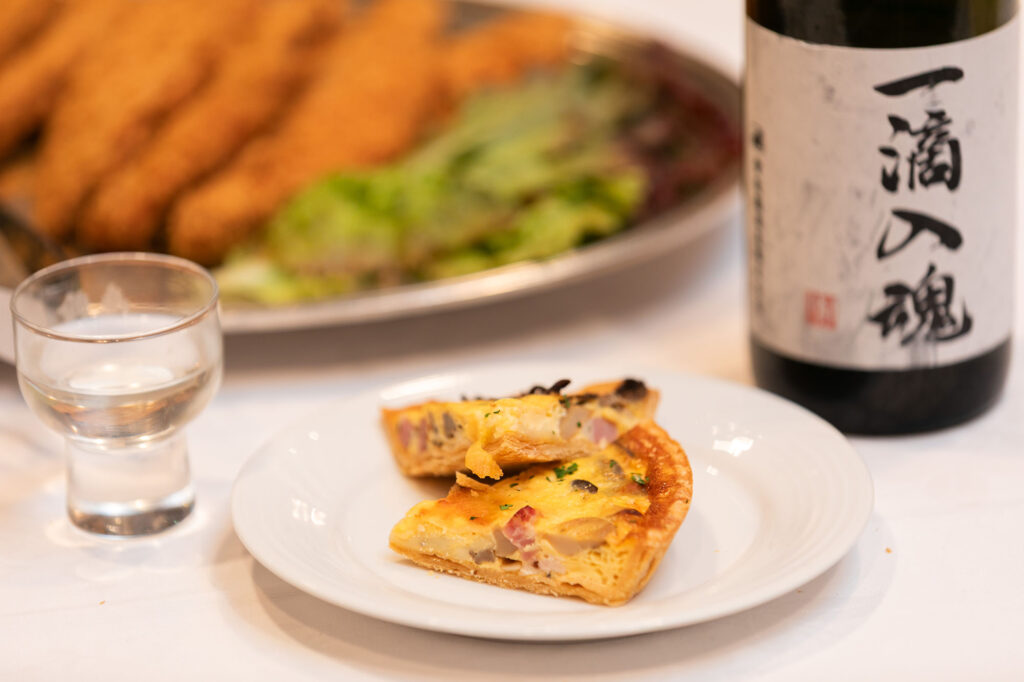
For example, “Itteki Nyukon,” a signature brand of “Kamotsuru,” was paired with a quiche specially made by the hotel. The rich buttery aroma enhances the savory depth of the rice in the sake, creating a harmonious and layered experience on the palate.
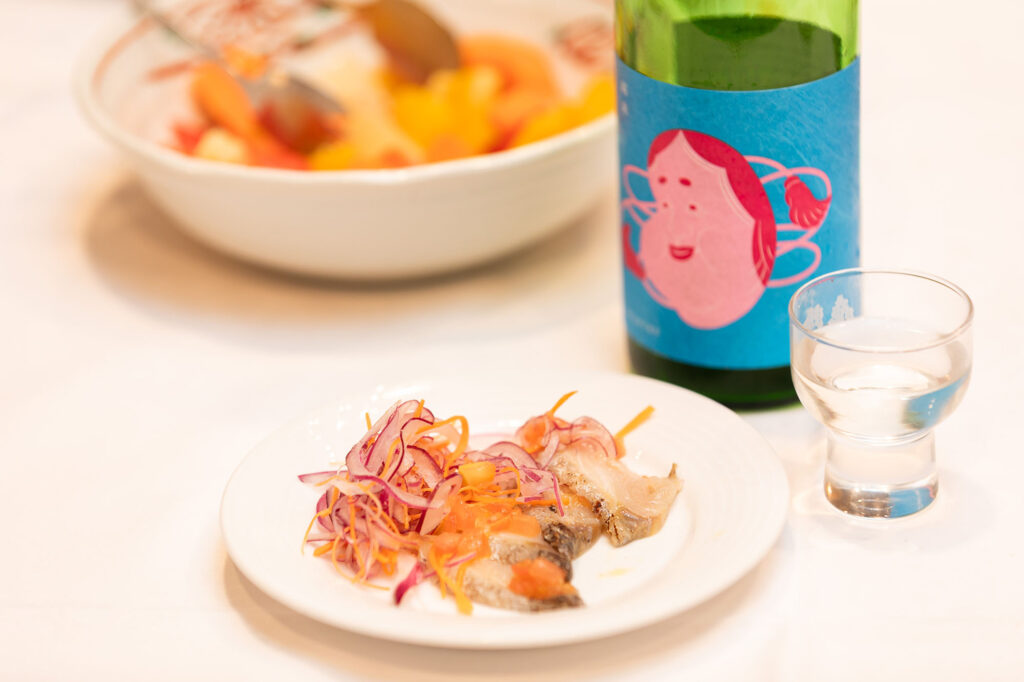
On the other hand, “Kyudaime Otafuku Junmai” by Tsuka Shuzo was paired with “Seared Kan-sawara and aromatic vegetables.” The lightly seared fatty Sawara and the slightly bitter aromatic vegetables were in perfect harmony with the refreshing dry sake. With each sip, the flavored profile became more distinct.
This pairing showcased the remarkable versatility of sake, harmonizing effortlessly not only with Japanese cuisine but also with Western dishes.
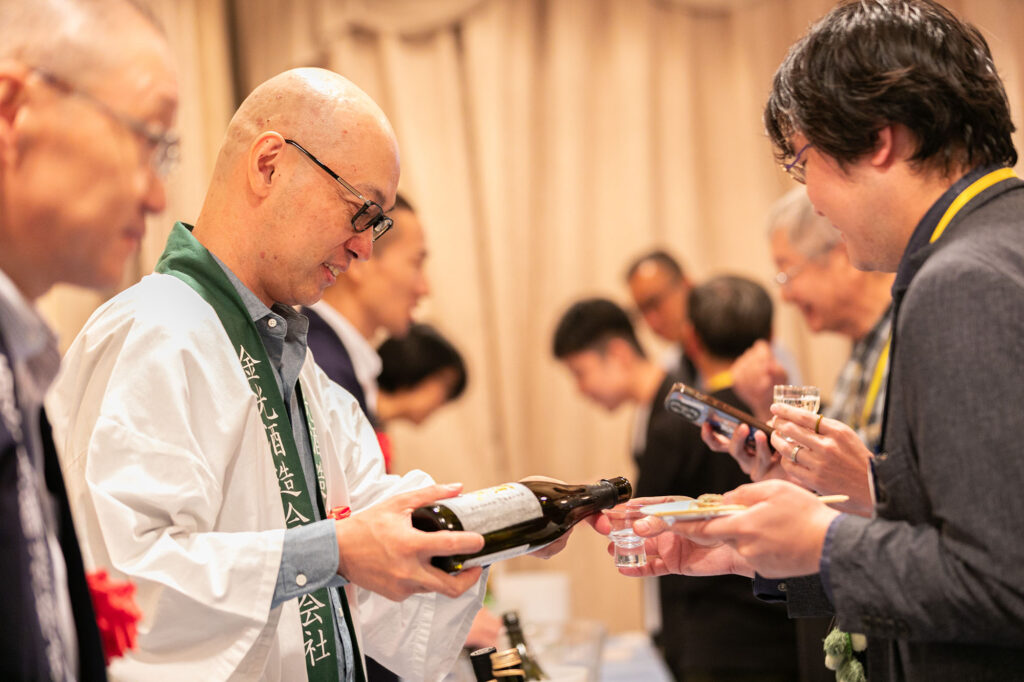
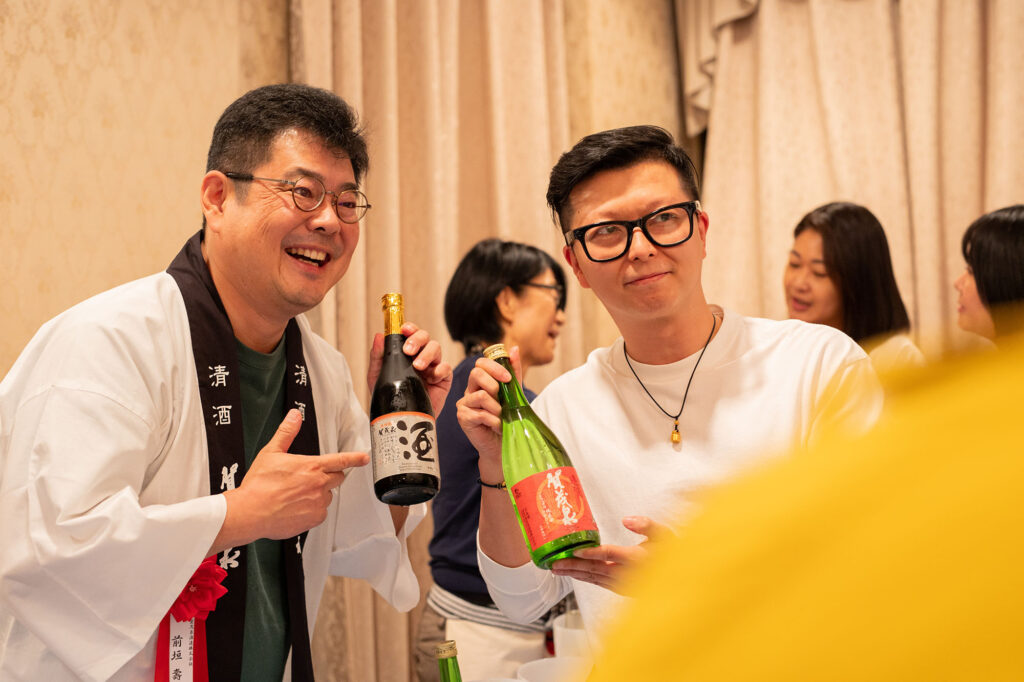
“Sake is one of the best beverages recognized by the world. It brings people together,” said a sake sommelier from Brazil.
True to those words, as they clinked glasses and shared cups, the distance between them grew smaller, and the people who have spread the word about sake around the world and the local brewers in Higashihiroshima connected heart to heart.
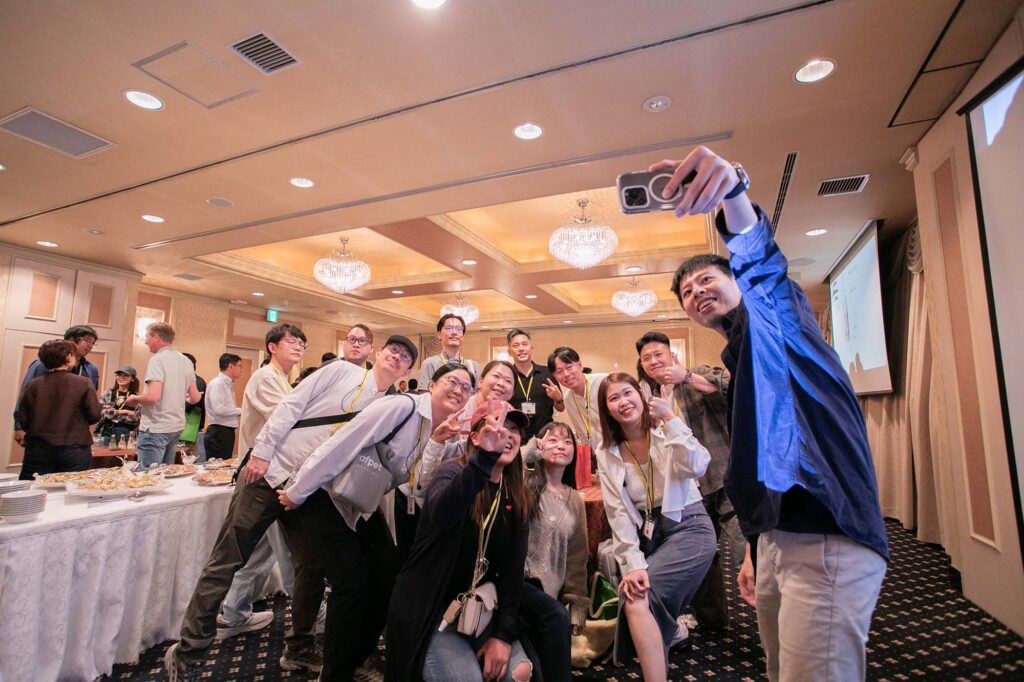
At the end of this gathering, the participants spontaneously said to each other, “Let’s meet again in Saijo,” and the event ended on a vibrant high note. The town of Saijo truly embodied the “World connected by SAKE.”
Pulse of Sake Town Felt at Sake Festival
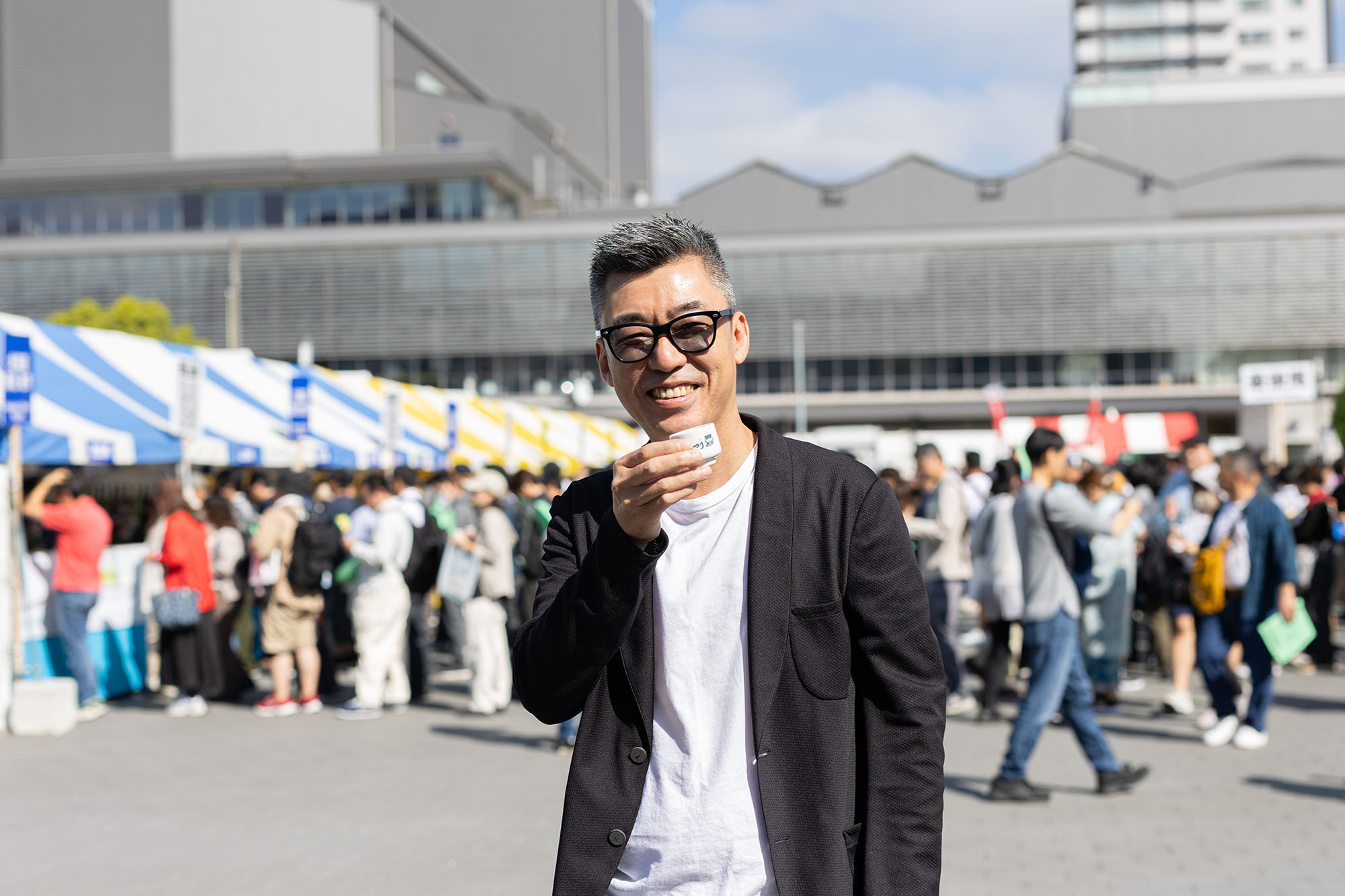
The next day, participants joined Sake Festival held annually in the Saijo area of Higashihiroshima City. It is a large-scale festival dedicated to sake that attracts more than 200,000 people every year.
When you get off the train at the station, you can sense the aroma of sake and hear the sounds of laughter and “Kanpai (Cheers)!” from all directions on the streets. On this day, during this festival, the town of Saijo is truly the world’s “Sake Town.” Everyone who visits becomes captivated by sake.
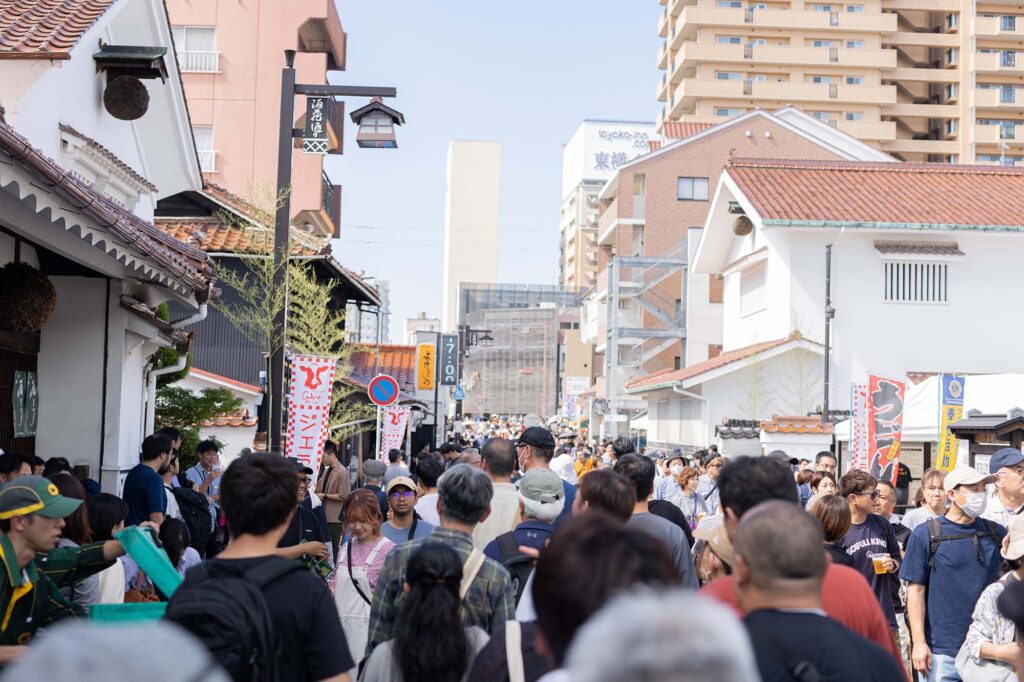
On this day, the sake sommeliers attending the Forum freely sampled sake and immersed themselves in the atmosphere of Saijo with all five of their senses. A wide variety of sake was served by local people with smiles, and visitors were entranced by sake regardless of their nationalities and languages.
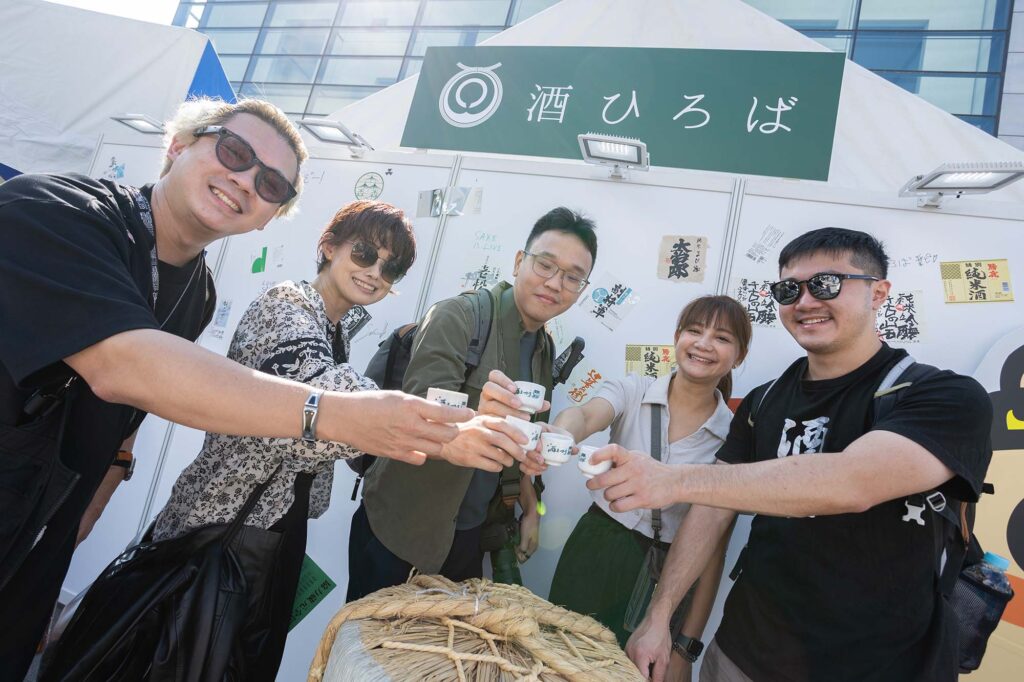
A group from Singapore said they were first moved by the warmth of the “people” in Saijo.
One of them said, “Saijo may be a small town, but the warmth of the people here has made us feel at home. The breweries truly take pride in their sake and shared that passion with us.” He went on to say, “I was deeply moved when I heard a brewer saying, “I want to make sake that is not expensive and that everyone can enjoy.”
He also said, “I was impressed by their efforts to make sake and “pass on the culture of sake to the next generation.” I feel that sake has the “power to connect people.” When I share a glass with someone else, we can become friends. That’s why I hope people around the world can connect with each other more through sake.”
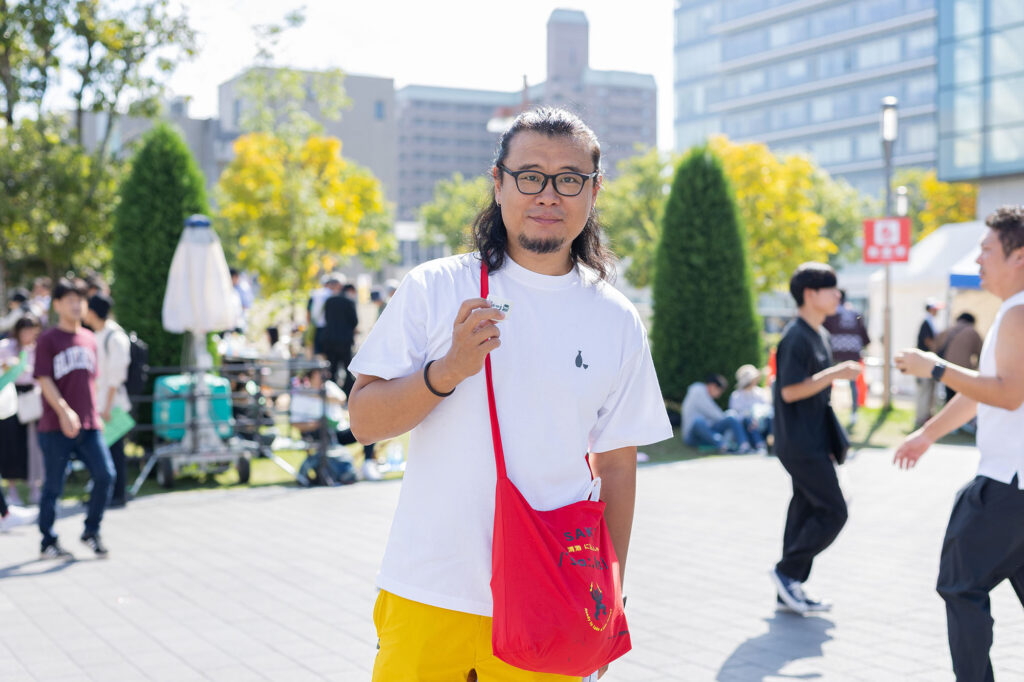
Next, Mr. Peng Li, a leading sake promoter who runs a sake bar and holds sake events in China, is known for spreading the appeal of sake, deeply enjoyed his first visit to the Sake Festival.
He said, “Saijo’s sake has a “story.” Its taste exudes the pride of the breweries who have made efforts to brew sake in this area with soft water which was once considered to be unsuitable for sake brewing. It’s not just their techniques that make the sake so appealing, but the stories you hear that fascinate me.”
With an eye on cultural expansion, he added, “I want to introduce the culture of warm sake more widely. Since warm drinks are favored in China, I’m sure that paring them with food will open up new ways to enjoy sake.”
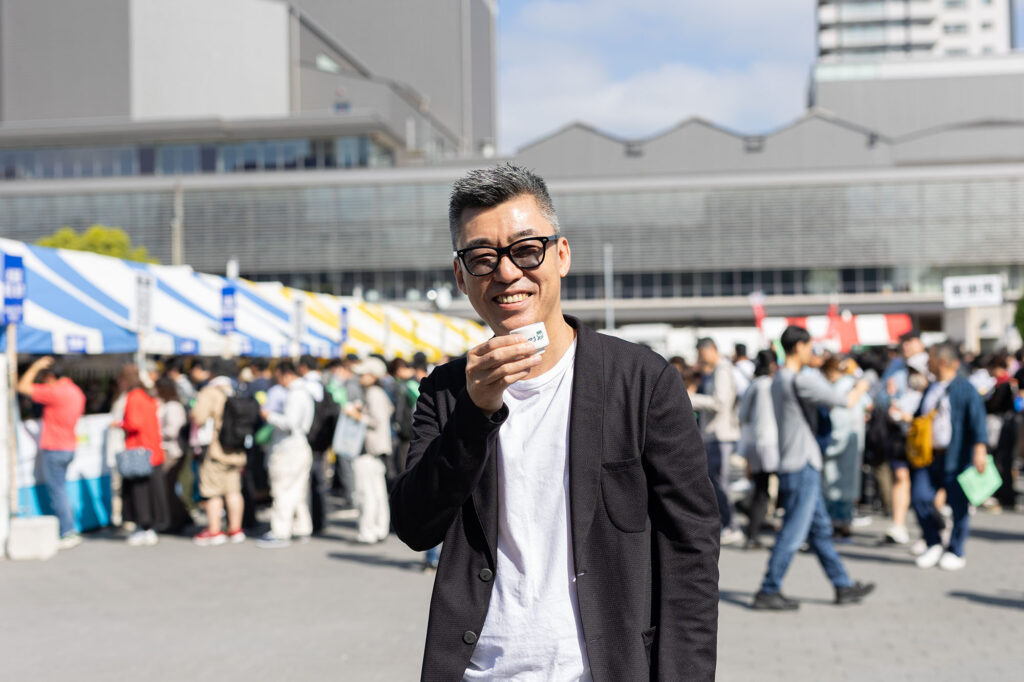
“It was impressive to hear the breweries speak of ‘all of Higashihiroshima as one team.’ It was very unique and refreshing as it is rare for sake to be introduced overseas on a prefecture or regional basis,” said Mr. Michael Ou, a Taiwanese sake promoter.
He also said, “Saijo is a living Sake Town rather than a tourist spot. Within a short walk from Saijo Station, you can find a row of sake storehouses. If you drop by one of them, people there will welcome you, saying, “Come on in.” Such warmth is reflected in the taste of sake. If you take the train from Hiroshima Station, you will soon arrive. I want many people to come to Saijo from overseas and drink sake.”
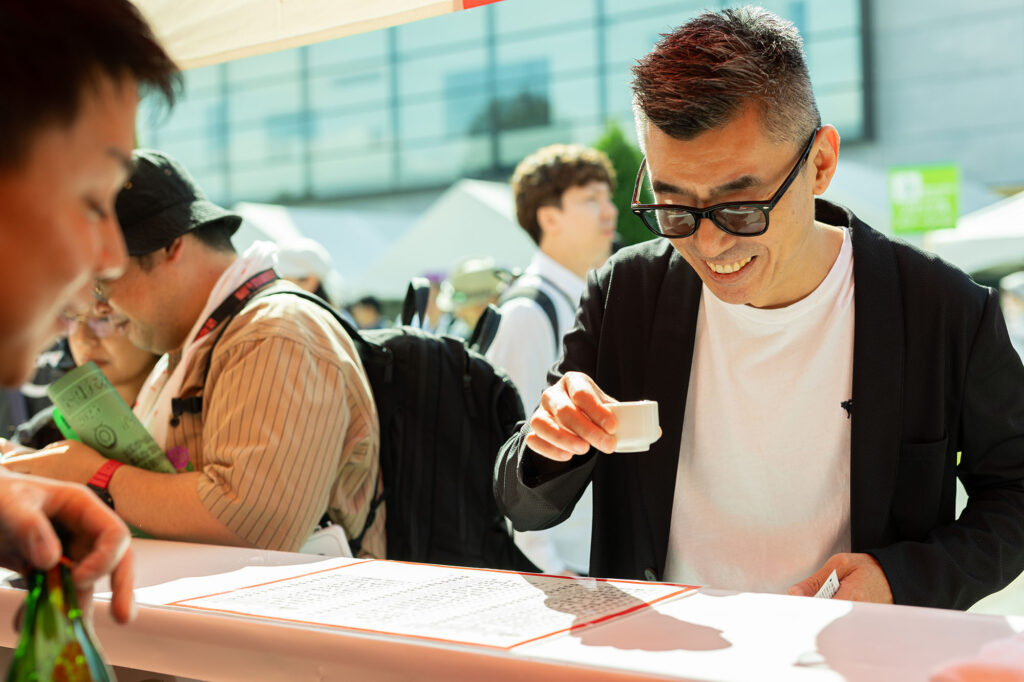
Amid the excitement of the Sake Festival, the sake sommeliers from overseas were taken in by the appeal of Higashihiroshima while talking about the future of sake from their own perspectives.
Why does this town attract sake lovers from all over the world? It’s not just because there is great sake. In this town, there is an endearing townscape, and its history and culture passed down from generation to generation and the warmth that connects people are still alive here.